

Callan Marine to accelerate Sabine-Neches Waterway deepening by eight years, add two anchorage basins, and deliver 44 feet of usable draft
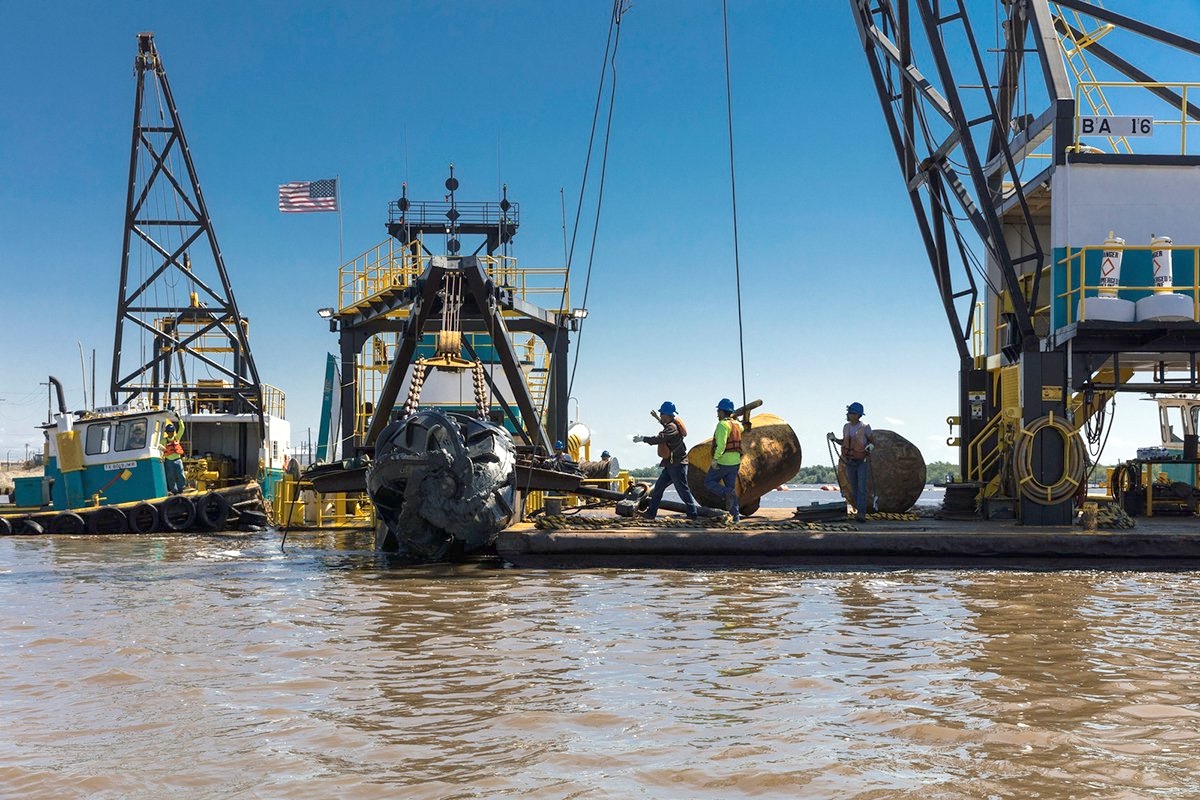
The Sabine-Neches Navigation District (SNND) announced April 14 it has signed a $239 million dredging contract with Callan Marine Ltd., marking a major milestone in the Sabine-Neches Waterway Channel Improvement Project, according to a news release.
Under the contract, Callan Marine reportedly will remove approximately 20 million cubic yards of material, construct two additional anchorage basins, and deliver 44 feet of usable draft from the Taylor Bayou intersection to the ports of Port Arthur and Beaumont, including the waterway’s major industrial deepwater terminals. Dredging operations are scheduled to begin in early June and must be completed by April 15, 2028.
The work is part of a broader, federally authorized effort to deepen the Sabine-Neches Waterway from 40 feet to 48 feet. Once complete, the added depth and new anchorage capacity are expected to improve navigation safety, reduce vessel delays and expand long-term capacity for the region’s ports and industries.
“The Sabine-Neches Waterway plays a vital role not just in industry, but in the long-term stability of Jefferson County,” said Jefferson County Judge Jeff Branick. “This project helps ensure the channel is better equipped to support the ongoing operations and future needs of the industries and communities that call Southeast Texas home.”
The milestone positions the project for completion eight years ahead of the U.S. Army Corps of Engineers’ most recent schedule, after the navigation district assumed responsibility for the remaining construction.
The Sabine-Neches Waterway is one of the nation’s most strategically important deep-draft waterways, serving a dense concentration of refining, petrochemical, LNG, crude oil and military fuel facilities along the Texas Gulf Coast. Completion of the project is expected to improve vessel access and operational efficiency, expand export capacity and strengthen U.S. energy security and supply chain resilience.
“The Sabine-Neches Waterway continues to lead the way in advancing American energy dominance, and this latest contract is a clear example of that progress as the project moves years ahead of schedule,” said U.S. Rep. Randy Weber, R-Texas. “I have worked closely with local leaders and President Donald Trump to keep this project at the forefront, securing more than $9 million in federal funding in fiscal 2026 alone to advance the waterway to its congressionally authorized 48-foot depth.”
“The Sabine-Neches Waterway is central to Jefferson County’s local economy and industrial base,” Branick added. “This project strengthens the channel’s efficiency, reliability and capacity, helping ensure the ongoing operations and future needs of the industries and communities that call Southeast Texas home.”
Earlier this month, on April 1, the navigation district and the U.S. Army Corps of Engineers signed a memorandum of understanding allowing the district to move forward with the contract while remaining eligible to receive federal funds to cover at least 60% of the cost.
The contract follows strong federal support. On April 3, the president’s budget included an additional $30 million for the project. Combined with more than $200 million appropriated over the past 12 months, total federal funding now exceeds $546 million.
At the direction of the administration, remaining federal funds not yet expended by the U.S. Army Corps of Engineers, along with future appropriations, will be directed to the navigation district. The goal is to complete the project at least a decade ahead of the original schedule, according to district officials.
The navigation district is the local sponsor of the waterway, one of the nation’s busiest deep-draft ship channels. The district works with the U.S. Army Corps of Engineers, the ports of Port Arthur, Beaumont and Sabine Pass, and private industry to maintain and improve the waterway, which supports more than 100,000 jobs and billions of dollars in annual economic activity.
