

Proposed project includes 3.05 miles of 48-inch pipeline from Jefferson Co. into Cameron Parish
The Pipeline and Gas Journal reported March 16 that Kinder Morgan Louisiana Pipeline (KMLP) has filed with the Federal Energy Regulatory Commission for approval to build the Texas Access Project, a natural gas pipeline expansion intended to move more Texas supply into the Southwest Louisiana LNG corridor, including service to Woodside’s planned LNG terminal.
According to the Journal, the proposed project includes about 3.05 miles of 48-inch pipeline from Jefferson County into Cameron Parish, Louisiana, including a 0.99-mile horizontal directional drill beneath the Sabine-Neches Waterway. It also includes connector segments, pigging facilities, metering modifications and a new interconnect for Woodside’s LNG terminal in Calcasieu Parish, Louisiana.
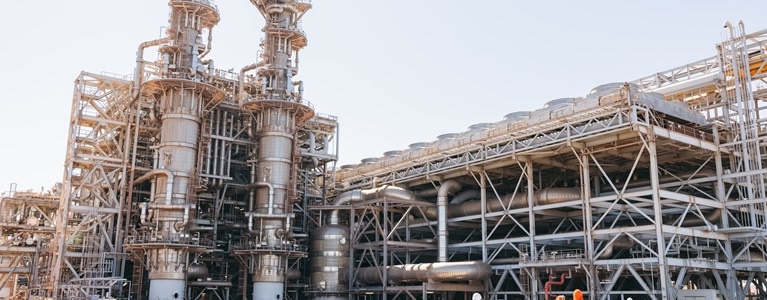
Woodside Louisiana LNG is an under-construction, sanctioned, LNG production and export terminal in Calcasieu Parish, Louisiana. It is a high-quality, scalable development opportunity, with a total permitted capacity of 27.6 million tonnes per annum.
Site construction has commenced on the project, which contemplates the construction of five LNG Plants through four phases.
Bechtel is the selected engineering, procurement and construction contractor.
In April 2025, Woodside made a final investment decision to develop the foundational phase, which is comprised of a three train 16.5 Mtpa development.
Development of Louisiana LNG reportedly will position Woodside as a global LNG powerhouse, enabling the company to deliver approximately 24 Mtpa from its global LNG portfolio in the 2030s, and operating over 5% of global LNG supply.
“Growing LNG export demand in Southwest Louisiana has resulted in increased utilization of existing pipeline infrastructure,” the filing stated.
According to the March 6 application, the project would allow Kinder Morgan to transport up to 1.3 billion cubic feet per day of natural gas from new receipt points in Southeast Texas into delivery points on its existing Louisiana system. The company said the project would create a new west-to-east supply path into an increasingly constrained LNG market.
“The Texas Access Project is designed to provide additional access to natural gas supply in Texas and deliver that supply into the Southwest Louisiana market,” the company said in its FERC application.
Kinder Morgan said the project does not increase the certificated design capacity of its system. Instead, it would extend the paths through which existing capacity can access new Texas gas supplies and deliver them into Southwest Louisiana.
The filing identifies Woodside as the anchor shipper behind the project. Kinder Morgan said Woodside executed a binding precedent agreement for 1,000,000 Dth/d (decatherms per day) of firm transportation service, providing what the company described as strong commercial support for the project.
A decatherm represents the energy content of approximately 1,000 cubic feet of natural gas.
The transportation package reportedly includes 500,000 Dth/d from the proposed TIP receipt point, 350,000 Dth/d from Kinder Morgan’s existing interconnection with NGPL enabled by metering changes, and 150,000 Dth/d of previously unsubscribed capacity reserved for the project. All of it would be delivered to the Woodside interconnect.
Kinder Morgan reported the project is designed to help meet growing gas demand from LNG facilities in Southwest Louisiana, where pipeline congestion has increased as export capacity expands. The filing points specifically to rising flows tied to Venture Global’s Plaquemines LNG terminal as evidence of tightening market conditions in the region.
According to the Journal, the company estimated the total project cost at about $112 million and asked FERC to issue a certificate order by Feb. 5, 2027.
Kinder Morgan said the timeline would allow construction to begin as early as April 2027, with part of the project entering service by Jan. 1, 2028, and the remainder by April 1, 2028.
