

By Dannie Oliveaux | dannieoliveaux@theexaminer.com
According to the 2025 Community Impact Report, Port Arthur LNG is poised to become the largest LNG export hub in Texas, delivering reliable energy from the Gulf Coast to support global energy security and U.S. leadership in natural gas.
The $25 billion investment in Southeast Texas is expected to create thousands of jobs, boost small businesses and generate lasting revenue for the community. Port Arthur LNG represents the belief that one Gulf Coast community can power the world while building a brighter future at home.
Since 2015, Sempra Infrastructure has invested more than $4.5 million in nonprofits, schools and community-based organizations in Jefferson County, according to the report, and anticipates about $20 million in social investments through 2030 to support the health and well-being of the region.
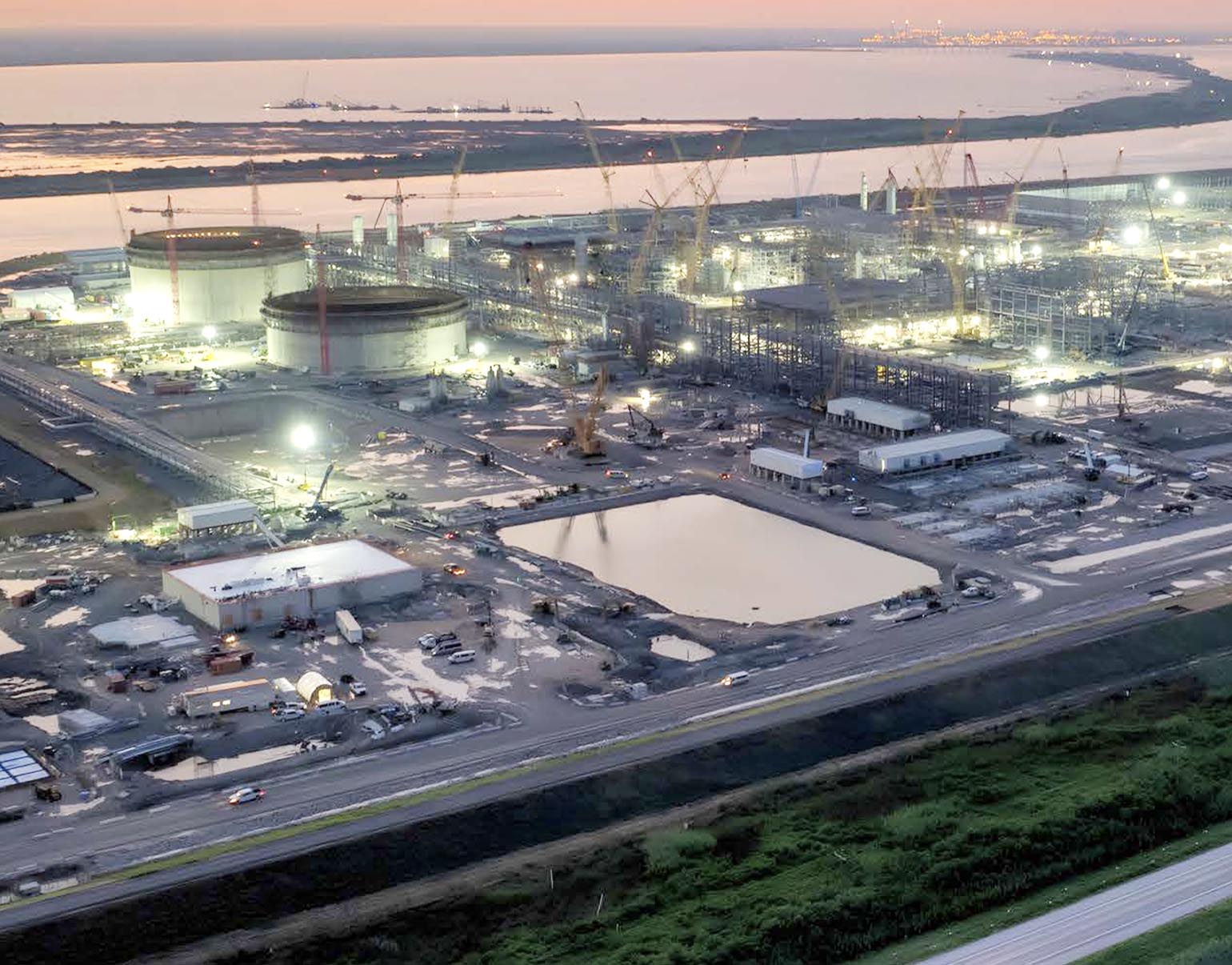
In 2025, Port Arthur LNG advanced one of the largest energy infrastructure projects in Texas, marking a year defined by steady construction progress, major achievements and increased visibility across the region. As work continued on Phase 1, teams delivered critical milestones that moved the project closer to bringing new U.S. LNG capacity online and advanced the Port Arthur Phase 2 project toward a positive final investment decision.
The 2025 milestones were:
• Phase 2 received non‑FTA export authorization
• Completed a sale and purchase agreement with JERA for Phase 2
• Completed a sale and purchase agreement with ConocoPhillips for Phase 2
• Completed a sale and purchase agreement with EQT for Phase 2
• Phase 2 achieved a positive final investment decision
• The main cryogenic heat exchanger was delivered and installed in Train 1
• Both LNG storage tanks reached raised‑roof milestones
• Completed work on the berm surrounding the project
• Wick drain and initial piling work for Phase 2 started
• Over 20 large deliveries received from the Marine Offloading Facility
Chris Fortenberry, vice president of operations, said that if he had to describe Port Arthur LNG in one word, it would be “supportive.”
“Our culture is built on respect for people and the communities where we live and work. Every role here contributes to something bigger — advancing global progress, strengthening local pride and shaping an energy future we can all be proud of. That’s why Port Arthur LNG is more than a workplace — it’s a company people choose to be proud of,” Fortenberry said.
He also noted that safety and operational excellence are non-negotiable at Port Arthur LNG.
“Every decision and every action reflects our unwavering commitment to safeguarding people, communities and the environment while delivering world-class performance at every stage of construction and operations. It’s not just what we do; it’s who we are,” he said.
Social investment
According to Port Arthur LNG, the company believes powering the global economy starts locally. Its commitment to strengthening Southeast Texas includes investing in the community, supporting local opportunity and contributing to long-term resilience.
In 2025, the company’s work was guided by three focus areas: climate action and biodiversity, increasing opportunity and economic prosperity.
Last year, Port Arthur LNG invested $1,104,294 in the greater Port Arthur area through funding from Sempra Infrastructure and the Port Arthur LNG Phase 1 project, reinforcing a stated commitment to long-term community impact.
Of the $1.1 million invested, $583,000 went to partnerships, $257,000 to emergency grants, more than $57,000 to sponsorships and $52,000 to community grants.
Operations and employees
The plant has hired 133 permanent operations employees; 74 are local residents of Southeast Texas. The company’s internship program with Lamar State College Port Arthur hosted nine students last year, all of whom completed hands-on LNG training and accepted full-time positions with Sempra Infrastructure after finishing the program.
In 2025, the Port Arthur LNG site provided construction-related jobs for approximately 5,406 workers. Phase 1 created opportunities for 1,256 local employees, while Phase 2 supported 90 local workers.
There were more than 10 million work hours logged in 2025.
Partnerships
According to the report, every Friday during the school year, hundreds of students in Port Arthur ISD and Sabine Pass ISD go home with more than weekend plans — they take meals, snacks and drinks that help bridge the gap while school is out, through a $133,000 partnership with the Southeast Texas Food Bank.
By December 2025, the program delivered 58,000 meals over 21 weeks, supporting 700 students.
The Beyond Out of School Time (BOOST) program addresses a critical gap for working families whose schedules extend beyond traditional school hours. Through a $60,000 partnership with the YMCA of Southeast Texas and the United Board of Missions, BOOST provides after-school care paired with hands-on learning in science, technology, engineering, the arts and mathematics (STEAM) for elementary-age students.
Sempra Infrastructure is also helping expand access to STEM education, leadership development and life-skills training for young women across Orange, Beaumont and Port Arthur. Through a partnership with the Girl Scouts of San Jacinto Council, school-based programming was delivered across 13 campuses, reaching more than 3,000 elementary and middle school students.
A $125,000 partnership is helping develop a 160-acre artificial reef nine miles offshore near Sabine Pass. Led by Friends of Sabine Pass in collaboration with the Texas Parks and Wildlife Foundation, the project aims to strengthen marine ecosystems that support biodiversity and the local community.
The Hi-54 deep artificial reef expansion includes 300 concrete pyramids and 100 cement plates designed to create long-term structure for fish, coral and other marine species, supporting the recreational fishing economy vital to coastal communities.
Food security
Food insecurity affects thousands of families across Southeast Texas, including students, seniors and working parents. In 2025, the team invested more than $383,000 in social programs aimed at stabilizing food access and strengthening the region’s hunger relief network.
Last fall, during a surge in food insecurity, Port Arthur LNG and Sempra Infrastructure deployed $250,000 in emergency grant funding to the Southeast Texas Food Bank.
The funding allowed the food bank to secure multiple truckloads of emergency food boxes and tray-pack kits distributed through community pantries across Jefferson County and beyond.
Community grants
According to the report, the company allocated $52,000 in eight grants benefiting about 8,900 people.
One grant supported Renewal Roots, a neighborhood-focused program that restores safety, stability and pride for residents in Port Arthur and Beaumont. Since launching in September 2025, Renewal Roots has supported 35 households, completed 140 service tasks and distributed 25 hydration readiness kits. Two participants have secured full-time jobs through the program.
Another grant supported Communities in Schools Southeast Texas, expanding school-based mental health services across the region. The program provides counseling, crisis intervention and trauma-informed care for students experiencing anxiety, depression, grief and behavioral challenges.
EmpowerEd grants
The report showed 16 schools were awarded $155,000, plus an additional $30,000 in grants supporting about 3,400 students.
Sabine Pass ISD received funding for hands-on learning across grade levels, including water rocket kits, hydroponics lab equipment and engineering kits.
Orangefield ISD students are gaining career-connected learning opportunities in math and science through graphing calculators and forensic science kits.
Nederland ISD received funding to expand learning in science, art and journalism, including robotics kits, motion equipment and laboratory tools.
Hillcrest Christian Academy received two grants supporting early STEM learning. One funded a mobile makerspace cart for engineering challenges such as bridges, ramps and pulley systems.
The second provided a mobile STEM station for Pre-K through second grade, featuring reusable kits for experiments including magnets, roller coasters and chain reactions.
